 English
 Magyar
 Deutsch
History of the Sorg-villa
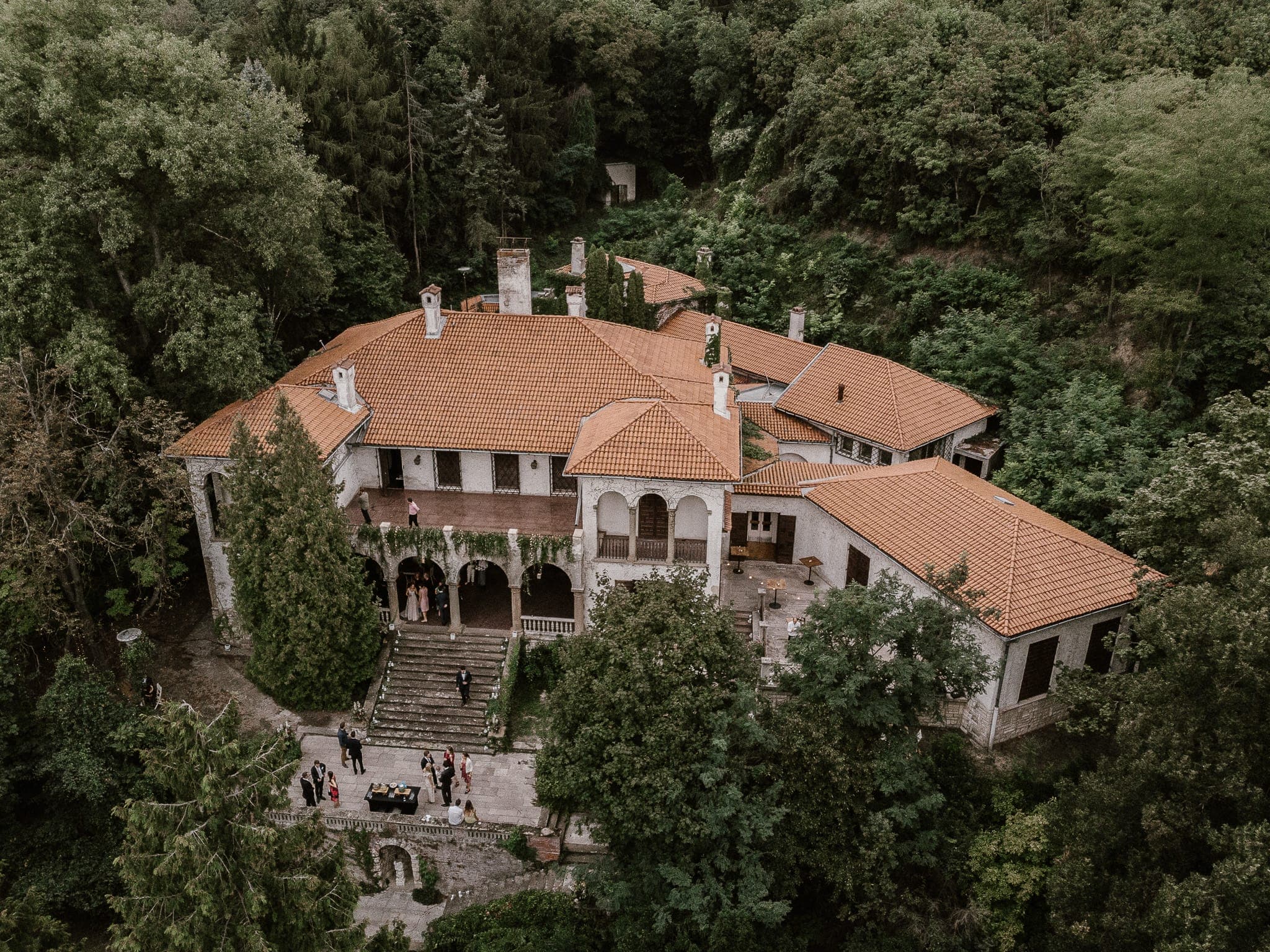
The Leányfalu estate, where the villa stands, was purchased in 1902 by János Lingel, the younger son of Károly Lingel, founder of the famous furniture factory. He built a large, Bavarian-style mansion, landscaped the garden, and planted an orchard on the hillside. The property remained in the Lingel family’s ownership until 1938, when it was sold to Milenkó Nagykovácsi, then owner of the Holzer Fashion House, a Budapest shopping center later known as Úttörő Áruház. According to sources, the wealthy merchant’s severely ill wife was unable to navigate the steep road leading to the house, so they quickly sold it.
The villa was purchased by the Sorg family in 1939. Antal Sorg Sr. was the owner of one of the most sought-after and largest construction companies in the first half of the 20th century. His activities spanned everything from minor projects to the construction of major investments in Budapest. Plans for larger buildings were commissioned from architects such as Jenő Lechner and Ignác Alpár. In the 1920s, Antal Sorg became the “governor’s master builder,” receiving the title of chief government councilor in 1928, and his family maintained friendly relations with the Horthy family. The Leányfalu mansion was rebuilt by his elder son, Antal Sorg Jr., and by 1943, it had achieved its full splendor.
“The builder of the house lived in America for years, spending a considerable time in Córdoba, Argentina, where the purest colonial style developed. He thus poured his experiences gained there into brick, wood, and stone when (…) he erected a South American palace on the banks of the Danube. The renowned fine and applied artist, Elek Falus, was commissioned for its realization, and the magazine’s images prove that he created not just a home, but rather a work of art. The romantic, turreted palace concealed a spacious yet homely interior, where robust furniture, wrought-iron grilles, heavy tapestries, and, of course, modern amenities like central heating and a dumbwaiter blended into a wonderful unity. And the garden naturally featured a tennis court and a car garage.”
All this happened during World War II. As the front approached in late 1944, the Sorg sons and their families moved to Germany, and from there to Argentina. Antal Sorg Sr. did not leave the country, and the communist regime prosecuted him in 1946. Following a People’s Court verdict, his company was liquidated, his assets confiscated, and he was arrested and imprisoned, as a result of which he died in 1948, officially recorded as “from senile decay.”
At the end of the war, the Sorg-villa also served as Soviet headquarters, then it was nationalized, becoming the presidential summer residence of Zoltán Tildy, and later a restricted retreat for the leaders of the state party. Interestingly, according to archival sources:
“On November 16, 1956, a strictly secret meeting was held in Leányfalu with the participation of Georgij Malenkov, Mikhail Suslov, Army General Ivan Serov,